Coach’s Blog

Ideas, ideals, and dealings from Tufts XC and Track & Field Coaches

Worlds Collide

Posted by Ethan on Thursday, November 20th, 2008

I’m sorry that it has taken me so long to get another rambling up on the blog since regionals this past weekend.  We are amidst some of my favorite weeks of the entire school year.  For these two weeks each season, the indoor and cross country seasons overlap.  Sure, that means that there is a fair amount of chaos around the office, but sometimes chaos brings out the best in us.

In reality, saying that indoor and XC overlap is a bit of a simplification.  We have athletes peaking for XC nationals with other cross country guys finishing up their transition from XC and starting up indoor.  Throwers, jumpers, hurdlers, sprinters are now able to get the coaching presence that they’ve earned over a great fall of strength and conditioning work.  Sometimes it feels like we’re coaching 10 different teams.  Luckily we have 11 different coaches to handle the workload.  In my first year at Tufts, we had a coaching staff of three.  Count ‘em, three.  Rod and I would be working hard with XC getting them ready for the national championships which would leave the lone wolf, Ed, holding down the fort at the track.  Since it was his first year at Tufts, this was quite the learning curve for all.  

Just three short years later, I get to the indoor track after a great XC practice and there are already 8 coaches working with the team and Dan (our strength coach) waiting in the weight room for them.  I can’t even begin to express the stress relief that they all bring to me.  Thanks guys. 

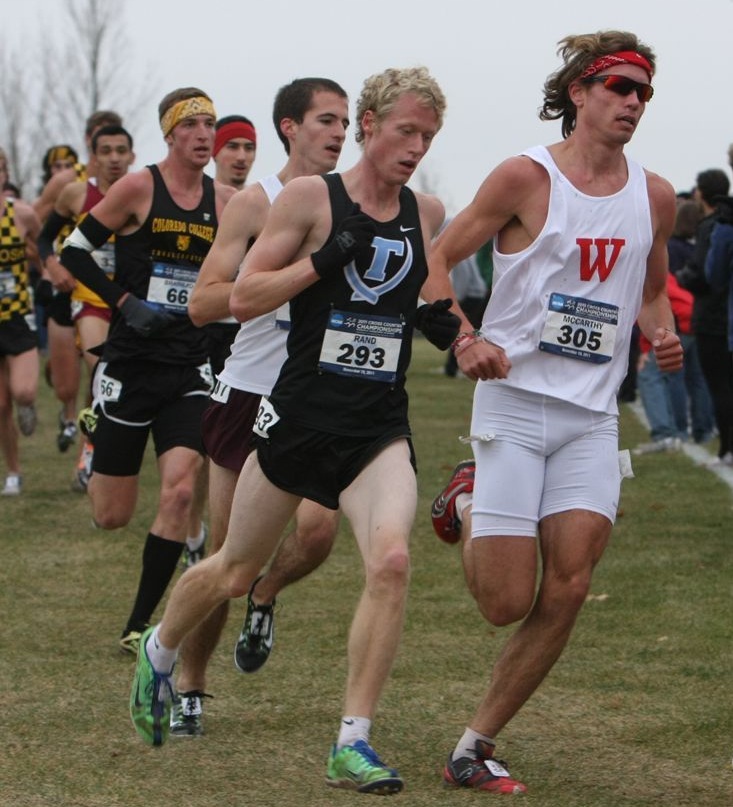
It has really given me a lot of time to process this year’s XC season without having to immediately switch gears to indoor track.  I will definitely hold off on finalizing any thoughts about this year’s campaign until after this weekend’s NCAA race.  As a preview, I am proud with how we raced and our drive to actualize our full potential.  I do think that there a few small changes that we can make to see some nice growth.  The key isn’t to change too much.  How can you make 2-3% of changes and see 10-15% of growth?  That’s the question of the day…

Filed in General Tufts Thoughts, My Approach to Sport | No responses yet

Moments like these

Posted by Ethan on Friday, November 14th, 2008

It really is moments exactly like this that makes my job so amazing.  We are now less than 12 hours until the gun for the New England Championships.  So many questions.  So many unknowns.  So many variables.  So much fun.  How many people really get the opportunities to do something like this in their life.  And on a semi-regular basis.  

The sad thing is that most people in this position still forget to enjoy it.  We bust our but for months and years on end and then sometimes forget to actually enjoy it.  How can this not be fun?  Sadly, success is all to often determined by the outcome of the race, not by how the race is run and what you learn from it. That’s sad because when you do that, you don’t know whether you can enjoy yourself until everything is over.  By then, it’s way to late, the moment has passed.  

I encourage you to have fun, enjoy what your doing, live in the present.  You only get one chance to do what you’re doing right now at this moment.  You only get one chance to run in this meet, on this day, with this team.  Enjoy yourself.  Because, really, why do this if you don’t enjoy yourself when your doing it.  So regardless, tomorrow’s going to be a lot of fun for me.  Why?  Because we’re going to do everything in our power to extend our season.  It may happen.  It may not.  But we’re going to do what we can.  And that’s all anyone can ask.

Filed in My Approach to Sport | No responses yet

Nothing beats NESCACs

Posted by Ethan on Monday, November 3rd, 2008

Saturday marked the passing of another NESCAC XC meet.  I’d have to say that this was one of the best in recent years.  The course was in great condition thanks to the work of the Pineland Farms staff and the Bates coaches.  Thank you all.  But the rarest of things happened…we had amazing weather for the NESCAC Championships. 

2007 - Williams College - Cold, driving rain

2006 - Connecticut College - Hurricane w/ 50-60mph gusts and a flesh-eating swamp

2005 - Wesleyan University - Sloppy, muddy, rainy, cold

It really is amazing though because even in 05, 06, and 07, it was still an unbelievably enjoyable meet.  When you take away the horrendous, life-altering weather then it just becomes a great experience.  The NESCAC Conference as a whole simply does it right.  It is the epitome of healthy competition.  Everyone is out there running their best and trying to do everything in their power to make sure that their team comes out on top, but when all is said and done and everyone has crossed the line, it is a completely different story.  

There is a great aura of sportsmanship in the NESCAC Conference that is unlike any other that I’ve experienced or heard about.  Athletes truly respect one another.  The competition gets put to rest after the game, meet, or race is finished.  Now don’t get me wrong, it will ramp up to full force again the next weekend.  But for a brief moment, everyone in the conference tips their hats to one another and congratulates each other on a job well done.  

I think it starts at the top.  I have yet to meet a NESCAC coach, in any sport, at any school, who I have been anything less than utterly impressed with.  When schools are able to bring in people who truly understand and believe in the foundational goals of the conference then those personalities and perspectives trickle down to everyone involved.  

I’m glad that Tufts has the honor of hosting the NESCAC Tournament for both Field Hockey and Volleyball this fall.  I expect the competition to be fierce and the admiration to equal the competition.  There are four NESCAC field hockey teams ranked in the top 8 of the nation, three men’s XC teams ranked nationally, and five women’s XC teams.  NESCAC is easily one of the most competitive DIII athletic conferences in the nation, if not the most.  

With all that competition, it could be very easy for there to exist a great deal of hatred and ire across the lines.  The fact that the conference is so competitive and still maintains its ideals and down-to-earth outlook is even more impressive.  I really can’t see myself ever coaching anywhere outside of NESCAC.  Not only is it the best in sports, but it represents the best in sports as well.

Filed in My Approach to Sport | No responses yet

No longer “young” adults

Posted by Ethan on Monday, October 27th, 2008

When I step back and compare our current Jumbo student/athletes to myself at their age, I see a few huge differences.  Mainly, they’re a lot more independent and mature than I was at there age.  For the most part, I actually feel that Tufts does a better job preparing its students for the real world than my alma mater did for me.  Not that I felt unprepared after college.  Although if I told you what I did in that first year out of school, then you’d probably think I was unprepared.  No, it’s more a matter of how well Tufts brings along it’s students.  

In many ways, the Tufts undergrad experience seems more like a graduate program than an undergrad.  The schedule, classes, projects, and approach to the learning process just seem so much more postgrad.  My undergrad years felt more like an extension of high school, just with a little more freedom and less responsibility.  Yeah, that’s what I said…less responsibility.  College is a breeze.  4-5 classes a semester, not 7-9.  2-3 classes a day, not 7 or more.  No travel time.  You basically sleep about a 5 minute walk from everything in your life.  

Now this is the first semester that I’ve really put together the fact that these guys are a lot more self sufficient than I was at their age so I don’t really have a rational reason figured out yet.  Maybe it’s the city.  Maybe it’s the grad school/students.  Maybe I wasn’t as reliant as I think I was.  

I feel as if I maximized my college experience to the best of my ability.  I utilized the academic and athletic side of my school to it’s maximum.  That being said, I’ve worked at Tufts in a number of positions (Residence Hall Director, Teachers Assistant, Tutor, Track/XC Coach, breakdancer) and it just seems impossible to do everything.  If you have a personality where you need to have your fingers in every pie and be involved with everything, then Tufts is definitely not the place for you.  You would lose your mind in the first semester.  There is just way too many options here for you.  You really have to chose your interests carefully, but luckily, can change your mind at a moments notice.  

I know, I know, this blog sounds way to preachy about Tufts.  And you probably think that I’m being incredibly biased and pro-Tufts.  I can’t do anything about that.  I can only speak to what I know.  And I know that there is just a lot more to do here than I had in college.  A lot.  Midd was great for me at that time in my life.  I looked at Tufts and I still ended up at Middlebury.  I was a rural guy who was a little scared of the big city.  

But look at me now.  Now I have umpteen sushi restaurants to pick from.  Sushi didn’t even exist in VT.  Granted, having those umpteen sushi joints won’t change anything…I’ll always end up at Roses.  Best sushi in Boston.  You heard it here.

I don’t know how this went from how mature my athletes are to an advertisement for Rose’s Sushi, but it just did.

Filed in General Tufts Thoughts | One response so far

Still scares the pants off me.

Posted by Ethan on Tuesday, October 21st, 2008

I know that I may be being very repetitive (I wrote about this in one of my first blog posts), but this stuff is so scary that it needs another post.  Sure, you may be an 18-year-old runner who feels invincible and that is why the military puts 18-year-olds on the front line.  But just like a bullet or land mine doesn’t care about your age, MRSA really doesn’t care about how omnipotent you feel.  This stuff will literally eat you alive. 

In a recent article on ESPN.com, Dana O’Neil highlighted the fight of Kenny George, UNC Ashsville’s 7′7″ center.  What started out as an infection in his foot led to a partially amputated foot and a fight for his life.  MRSA or methicillin-resistant Staphylococcus aureus will seriously mess you up if you’re not careful.  In recent years, it has reared its head in the NESCAC Conference and other large and small colleges, but because of our great training room staff, has yet to find its way to Tufts.  

MRSA is a form of staph infection; however, this form is commonly referred to as a ’super bug’ and broad spectrum antiobiotics have no effect on it.  Originally, MRSA seemed to primarily attack those with weakened immune systems in hospitals and dialysis centers.  This was referred to as Heath Care Associated MRSA.  As it gained strength and continued to develop its immunity to antibiotics it is now common among otherwise healthy individuals.  This form is called Community Associated MRSA.   Like gangrene, the most common solution to MRSA is amputating the infected limb.  In some patients in can even lead to death.  

The Mayo Clinic has this to say about MRSA…

Staph bacteria are generally harmless unless they enter the body through a cut or other wound, and even then they often cause only minor skin problems in healthy people. However, staph infections can cause serious illness. This most often happens in older adults and people who have weakened immune systems, usually in hospitals and long term care facilities. But in the past several years, serious infections have been occurring in otherwise healthy people in the community, for example athletes who share equipment or personal items. 

Okay, now that I’ve officially scared the pants off you too, what do we do about this?  Risk factors for MRSA include young age, crowded and unsanitary living conditions, association with health care professionals, having a weakened immune system, participating in contact sports, and sharing towels or athletic equipment.  (Some may feel that your freshman dorm room could be considered ‘crowded and unsanitary’ but I don’t know if it meets the Mayo Clinics standards.)  

As a track and cross country athlete, you are not at a terrible risk for MRSA.  That being said, you need to be extremely careful to follow our Training Room’s policies and standards.  If you have an open wound or abrasion then hot and cold baths are out of the question.  These open wounds are what will allow an infection like MRSA to elevate from minor to life threatening.  Also…

Keep personal items personal - this includes training room towels after an ice bath.  

Shower after practices and meets - if you are going to ice bath after a practice or race and will submerge more than your lower legs, then you need to take a shower beforehand.  

Wash towels - make sure that your towels get put in the laundry basket in the Training Room after every use.  

It isn’t hard to protect yourself from something as scary as MRSA.  Anything as nasty as this, that will end in amputation as a best case scenario, is something to watch out for.  The Tufts training staff take this very seriously and sterilize our whirlpools every morning.  I can’t vouch for whirlpools at other schools so it is your responsibility to protect yourself at all times.  Although I would love to work with para-olympians someday, I never want to see them come from my current team.

Filed in Science of XC / T & F | No responses yet

Sam McGuffie is a good tailback. (Posted by Ikenna Acholonu)

Posted by Ethan on Thursday, October 9th, 2008

To be honest I know nothing about tailbacks and who dominates that position, and I especially don’t know about the science and genetics of athletic ability. However I do realize the dangers of something being classified as inherently black or inherently white. When I read the article, the most disturbing part to me was the fact that Sam McGuffie receives letters from fans that call him “The Great White Hope.” This is a phrase that was used in a boxing match between Jack Johnson and James Jeffries in 1910 and racial tensions were extremely high at the time. Remnants of this mentality today scare me into thinking how much people invest in their sports. If racial pride becomes part of a sports definition, then the spirit of competitiveness can easily disintegrate into a spirit of intolerance and sometimes violence. 

Also, a common argument used today is reverse racism. The classification of tailback as something that is “black” could lead whites into thinking that they are experiencing reverse racism by not being given the same opportunity as their black peers. It is dangerous when a dominant group feels as if they are marginalized. Throughout history, action may be taken against the group that is now perceived as the new dominant group. Examples of this can be seen in the years of Reconstruction following the Civil War when blacks were given the opportunity to vote and hold positions of high government. This led to whites feeling threatened, creating Jim Crow laws and organizations like the Ku Klux Klan. Another example can be seen in countries rather than race. After Pearl Harbor, America, a super power, was threatened and many Americans felt unsafe. America’s response was a nuclear bomb…or two I think. Anyways the point is that the effects of these actions are still felt today. Now I’m not saying that there is going to be some huge tailback revolt with white tailbacks trying to take over, but I just want to point out the dangers that occur when the argument of ‘reverse racism’ is used. 

I do agree with you that there can be genetic differences that occur based on the environment one lives in that form specific traits as a basis of survival (nurture), and if this region is inhabited by a member of a specific race, then they may seem to dominate a sport because of that trait that they developed (like Kenyans in distance, or Canadians in hockey…don’t actually know if the Canada one counts). Anyways this does not mean that it is a trait inherently found in a person because of their skin color. I also agree with Fred when he noted the social factors and the feeling of ownership that attributes to the success of specific groups in certain sports. However, when it is acknowledged that someone is good at something because “he’s black” or “he’s white” then issues arise. An individual is not given credit for the work that they have done to attain success as in Fred’s example. Whites may not receive as much recognition in certain sports because they are not black and vice versa. (Example: NBA, how many sneakers can you name after a white man. I think it is because the industry is geared toward a black audience despite the accomplishments of white athletes. Let me know when the new Steve Nash shoes come out and I’ll be first in line.). It is also unfair that the accomplishments of an individual are diminished and only attributed to the genetic accomplishments of their race.

Personally I dislike it when someone says I must be good at track or basketball because I’m black. Similar justifications were used for keeping blacks in slavery because we were blessed with certain innate abilities. I know people aren’t thinking this when they say these statements but I’m all about giving credit where credit is due. And so basically this whole response was meant to give credit to Sam McGuffie for being a good tailback.

Filed in Genetics & Sport | No responses yet

Exactly how not to have this conversation.

Posted by Ethan on Wednesday, October 8th, 2008

I want to thank everyone who has taken the time to post and comment on our ongoing discussion about race, genetics and sport.  I hope you all felt comfortable adding your opinion.  I started to feel like this site became a message board more than a blog, but I think I’m okay with that.  I really don’t want to just sit here and spew out posts from my own head.  I’d much rather be a part of a larger dialogue that teaches me something new.  

I would like to start by echoing the sentiments of Coach Bright.

The first thoughts that come to my head after reading this response is that it would be helpful to question people’s views constructively rather than attempt to belittle them. Asking someone if they truly believe a statement they made is not constructive and discourages others to reply.

It can be difficult to separate emotions from such a potentially loaded conversation, but that makes it even more important to do so.  Having a safe and constructive environment to have polarized conversations is critical to moving forward.  

That being said, I would like to point out exactly how not to make your point in such a discussion.  Another athlete who’s name is imprinted on the wall of my office (sorry, the picture isn’t up yet) brought a website to my attention that is somewhat related to our conversation. The website, Caste Football, makes some very polarizing comments and I’m not 100% sure what type of reaction they are looking for from putting together such a website.  

Are they looking to jump-start a controversy and get their opinion any and all possible attention.  They seem to work with the mindset that “negative attention is still attention” and “there’s no such thing as bad publicity.”  In the ‘About Us’ section of their website the posit

We respect the fact that blacks make good football players. But we believe that by looking at football and sports overall through an objective lens rather than simply accepting the propaganda slant of the media, it is clear and obvious that whites are just as good as if not better athletes than blacks.

To give just one example, even though whites are only 10 percent of the world’s population, they win over 90 percent of the medals at the Winter Olympics and over 70 percent of the medals at the Summer Olympics, including many medals in sprinting and jumping.

Caste Football’s goal is to see that white athletes are respected for their abilities, and that they receive the same opportunities to succeed as non-white athletes.

By making statements of this nature, any semblance of a constructive conversation comes to a screeching halt.  Nothing annoys me more than seeing someone twist stats and figures to fit their best interests.  In this case, it is obvious that the Olympics are dominated by the industrialized world.  That 10% of the world’s population that is caucasian may make up 50% of the industrialized population.  (I’m hypothesizing on the 50% just to make a point.)  

Regardless, I see this same thing happen time after time again in my job.  So many coaches twist and manipulate facts and numbers to make their programs look strong.  What do you see when a program has 4 Srs, 3 Jrs, 4 Sos, and 14 Fr.  One that is “rebuilding and has a great future” or one that brings in 15 freshmen every year and gives them a 25% chance to survive or not quit before their sophomore year.  They both look the same from the outside world. Sorry, that is way off topic, but something that I just wanted to get out there and off my chest.  It really aggravates me to see so many HS seniors straight up lied to year in and year out.  

Back to what you’re hear to talk about.  The same athlete who brought Caste Football to my attention made a good DIII track analogy.  

They’ll point to Andrew Rock and say that he didn’t get an athletic scholarship because he was white, and a black athlete with the same credentials would have. They look at Andrew Rock and see 44.35 World Champ silver medalist and not a 40 point 300 hurdler as junior in high school (amazing what you can find with a simple google search) that had no chance of getting a scholarship. Furthermore, people on that site claim that blacks excel in sports because of frequent use of performing enhancing drugs, or that somehow these drugs do more to aid black athletes than white athletes (I wish I was making this up). I feel arguments like this accomplish nothing, because when a white athlete begins to run times on par with those dominating the sports, who can say that that person is not on drugs? 

And they can’t.  This is exactly the point.  It is sometimes okay to make unproved or unsubstantiated comments, but realize that they are so and that they carry less weight.  When you make an unsupported statement, but pose it as if you were saying 2+2=4 then you destroy any and all credibility you may have had.

No one has ever posted or tried to post anything on this site like what Caste Football tries to promote; however, I was contacted by a few individuals who had thoughts on the discussion but were hesitant to add to the conversation.  Please, don’t be.  We are all human and all make mistakes.  Fred Jones put it best in his first post with,

No matter what, race is always a tough issue to talk about in a racial diverse setting. We, as leaders, have to create an environment where people can express their real feelings without feeling judged or identified as a racist.  It’s important for ideas to be expressed so that we can know what people really think and move towards a better understanding of one another.

In other words, we all need to be comfortable saying something stupid so that we can all grow together.  We learn more from our mistakes than we do from our victories.  If you’re thinking it, then I can guarantee that there are a bunch of other people wondering the same thing.  That being said, it is imperative that if we ever feel insulted or criticized by someone’s comments that we are able to separate our emotions from the topic.  We need to let others speak their mind and be patient with them.  It’s the only way to learn from each other.

Filed in Genetics & Sport | 2 responses so far

The Bright Perspective (posted by Kevin Bright)

Posted by Ethan on Monday, October 6th, 2008

I think that this discussion is very interesting and I have a few points that I believe necessitate comment.

The first thoughts that come to my head after reading this response is that it would be helpful to question people’s views constructively rather than attempt to belittle them. Asking someone if they truly believe a statement they made is not constructive and discourages others to reply. Second, I would try to avoid bringing up personal stories to support your arguments, as written towards the end of your response when I believe you are making the case that a few African American children acquaintances of your own were breast fed, ate organic food, and happened to become Track and Field National Champions.

First, to the point on whether a particular race, ethnicity or culture, develops a sense of ownership or familiarity over a particular sport, and therefore has a larger representation.

I think whether a person argues for ownership or familiarity, it is essentially the same point. I believe that ownership is something that a person or athlete cultivates after becoming familiar enough with a particular activity. Furthermore, I believe that this factor of ownership or familiarity plays into the nurture side of Fred’s argument. Children, no matter the race, become familiar with a particular activity through their surroundings whether it is from their primary care giver, their siblings, neighbors, or region in which they live, among others. As a result, they develop skills in whatever activity they participate in from an early age. Then, depending on the person’s work ethic, personal drive, external support, social characteristics, and to some degree success, a person’s familiarity with an activity quickly changes to ownership. This familiarity or ownership of a race with a certain activity then is ultimately derived from whatever he or she was exposed to as a child.

Second, I do believe that there is some merit to Fred’s point concerning welfare food. Whether or not it creates ‘bigger people’ it does have a high caloric content; therefore, people, no matter their race, will digest these calories differently depending on their daily activities, and to some degree, genetics. A study designed to isolate the bulk of these variables which include race or ethnicity, body mass, caloric digestion, time, and physical activity would allow us to make a clear argument as to whether a person’s build is due to genetics or lifestyle. My guess would be is that it depends, and not on race. To my knowledge, no such study has been completed; however, if it has been, I would love to read it so send it my way.

Finally, I wanted to speak on your last point where you write, “I believe if all things were equal we would see more equal sports talent distribution as well as everything else in the world.” To be honest, I do not know where to begin, but I will attempt to compose my thoughts in a concise manner. I do not believe all things were created equal, which is why I believe that nurture plays a larger part in the success of any person or athlete than nature. I suppose the quickest way to explain myself is this way. There have been athletes that have not ‘made it’ or succeeded for a number of reasons, none of which have to do with the color of their skin, or their genetic make-up. If there were athletically superior people, their background, the resources they have access to when they are young, or the food they eat, should not have any consequence in their success as an athlete. Unfortunately, that is not the world that we live in. Not all children, and teenagers grow up in loving, nurturing, stable homes, and are provided with healthy diets. The effects of these differences are profound and affect not only their ability to mature as social and emotional beings, but inevitably, it affects their physical ability as well. Athlete or not, the source of a person’s success can not be found in their genetic make-up, but from the people that have loved, fed, fostered, and supported them from the very beginning, and the will of the individual. There are too many environmental variables for me to believe that only a person’s genetic ability determines their success or prowess in a particular activity or sport, and I encourage other’s to convince me otherwise.

Filed in Genetics & Sport | No responses yet

More From Fred… (Posted by Fred Jones)

Posted by Ethan on Monday, October 6th, 2008

Me: “But I think the strongest factor is that races, ethnicities, and cultures develop a sense of ownership over a specific sport”.

Skye: I think it is more a sense of familiarity more than ownwer ship. If black athletes were exposed to some of the other sports more readily possibly there would be more participation.

Skye: Do yo really beleive that certain races believe they are suppose to dominate certain sports? Hum??? I never heard that before and I belong to one of those groups.

1. I don’t think you can develop a sense of ownerhship without familiarity, as well as other things. So feeling a sense of ownership derives from many vaired experiencses, exposure, familiarity to a sport.

2. I do believe some people from different races/ethnicities feel like they should dominate a sport. Different people have different reasonings for it. But I believe some people feel like that way relates directly to the article and the discussion at hand. (A) I think some ppl feel as though they inherently possess the genetic makeup to perform at higher level than other people (I personally disagree with this). (B) I also think some people have been nurtured from family, friends, and other cultural symbols that makes them believe their race is superior in certain sport (which I also fundamentally disagree with).

So no, I do not believe certain races/ethnicities are suppose to dominate sports, but I do believe their is widespread belief that certain races are more inclined to dominate sports. I think some ppl adopt racial/ethnic genetic philocophy although I do not. If you read the original article Ethan sent out, you will see that scientists, as well as many other people believe ethnic dominance to be true.

Next point
Skye: Where do I begin….If your premise was even remotely true every non-black parent in America would be feeding their new born infants”welfare food” looking for a sports advantage.They are keeping their kids back a year to gain size and strength.

I believe social conditions play a larger role in someone’s athletic ablity than genetic make up, hence why I added in the information about welfare food. The food itself is REALLY UNHEALTHY and should NOT be the way you nurture a kid. Because low income residents many times lack the resources to consume healthier foods or engage in healthier child rearing practices, their babies/children end up bigger. This is one major reason why child obesity is at an alarmingly high rate amongst low income people.

So your arguement why non-black parents are not feeding their kids the food is not the best arguement. For health reasons, you don’t really want to do that. The nutritional intake is poor and other side affects are still unknown. Although the percentage of people benefiting from being bigger (wider) may cause them to have a size advantage in SOME sports, if you have a choice, you don’t really want to go down that route. Secondly, all the food (and other condtitions afflicting low-income folks) does cause children to be bigger not BETTER at sports. Again, I originally wrote this part to speak to the social conditions some people are under and may add to the imbalance in the number of people participating and excelling in sports.

Skye: I believe if all things were equal we would see more equal sports talent distribution as well as everything else in the world.

I completely agree with your last statement. To me, sports reflect are society at large. Things are not equal. We do not have equal access and resources to goods, trainers, facilities, opportunites etc. Because things are not equal, we have an imbalance in the number of athletes participating and thriving in certain sports.

Filed in Genetics & Sport | No responses yet

Genetics & Sports: Fred’s Response

Posted by Ethan on Friday, October 3rd, 2008

Okay I’m going to do my best to describe my opinions in a simple concise manner. 

When I read the article I sent you, two questions stood out to me.  

1.       Why are there so many blacks dominating SOME sports

2.       Are people genetically predisposed to have certain physical characteristics?

To address the first point, I think there are so many social factors that go into the high numbers of African Americans in sports like basketball, football, and track & Field.  But I think the strongest factor is that races, ethnicities, and cultures develop a sense of ownership over a specific sport.  Jamaicans feel like they are suppose to dominate sprinting, African-Americans feel like they are suppose to dominate basketball, Latin Americans feel like they are suppose to dominate baseball, Russians feel like their suppose to dominate weightlifting, Chinese feel like they are suppose to dominate gymnastics (ping pong).  A group sees its own people dominating a sport and aspires to be glorified in the same fashion.  Children focused on achieving success in a certain sport because they have a tangible symbol to model their success after.  You also have a strong number of individuals hoping to achieve the same success. Everyone uses each other for competition and to get better at their individual support.

Other things like coaching, access to facilities, the media, your family, and other external factors all play a factor and how far you advance.  But I definitely think that, blacks dominate certain sports because they see successful individuals like themselves accomplishing it and it most instances, children understand the Rock Star appeal associated with being a good athlete. 

My next and final point to the first question is early childhood development and environmental circumstances of children. Although I have no scientific evidence, I believe a child’s athletic ability is highly correlated with events in infancy and from ages 3-10. — I have seen horrible affects on children when their mother’s don’t properly nurse them.  Often times, babies who are not adequately nursed, do not properly develop and can have life lasting problems. Hence, babies have a hard time developing muscles that may prepare them for sports.  Secondly, children or families on welfare have an interesting situation. There was a study done on Formula milk, which is artificial breast milk, and welfare food.  There are chemicals in those substances that make babies bigger.   (Side not: Have you ever wondered why so many poor people are bigger, some of it is related to welfare food. It makes sense to think that poor folks would be skinnier because they have less food to eat.  That’s not the case.  Welfare food makes some abnormally big and can enhance someone’s chances to better at a sport like football or basketball.  African-Americans are disproportionally economically depressed and more likely to be on welfare than the average American. This could mean that they are more likely to bigger, taller, and or stronger to turn into a great athlete…

Secondly, I’m a strong believer in physical activity for kids from ages 3-10. In those years you start developing hand eye coordination and understand how to move your body the way you want it to.  I also think the more active you are, the more likely you will be better at sports.  If you have ever been to Jamaica, you will see kids running literally ALL day – all day.  In the US black kids are constantly moving and playing. I would say they are more likely to play outside because they are less likely to have the means video games, computer games, or tv the way other affluent families might have.  I think you find a disproportionate amount of black kids being extremely physically active.  Just a theory….But it holds up against my friends. Those who were very active as children are much more likely to be active in the later part of their life and better at sports.

2)  Now to the genetics part.  Although I hate saying this, but maybe a group of people might have genes that prepares them to excel in sports. You made a good point about Jamaican sprinters and Kenyan runners.  I’m just not sold on this.  Until there is actual evidence that any race is genetically advance, I’m going to side with nurture.

Nonetheless, what really upsets me is not the nature verses nurture debate, but when people dismiss the blood and sweat you put into your sport because of preconceived notions.  For instance, I remember when a runner once said, “All you have to do is go out there and pop a big jump,” after I competed at nationals.  He said it like it was so easy for me just to jump 48 feet and its harder for him to run a good race.  I’m not a distance runner and I don’t understand what they go through.  But I do know it’s not that easy just to go out there and jump far.  With his comment, I felt as though he ignored my physical and mental preparation to excel in high stakes competition.  I think he said it because he thought I was naturally good at jumping not necessarily because I worked for it (though in reality… I have been training my whole life).  Though I may learn and develop skills to jump well, nothing can surpass desire even if a scientist finds that there is some type biological trait associated with ethnicity.

No matter what, race is always a tough issue to talk about in a racial diverse setting. We, as leaders, have to create an environment where people can express their real feelings without feeling judged or identified as a racist.  It’s important for ideas to be expressed so that we can know what people really think and move towards a better understanding of one another.

That’s my two cents.

Filed in Genetics & Sport | 3 responses so far

Older Entries »